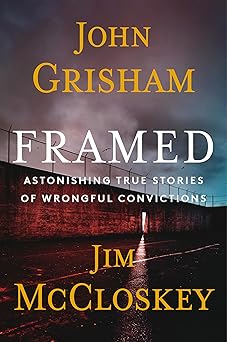
Framed: Astonishing True Stories of Wrongful Convictions

John Grisham, known worldwide for his bestselling novels, has a real-life passion for justice that led to his work with Jim McCloskey of Centurion Ministries, the first organization dedicated to exonerating innocent people who have been wrongly convicted. Together, they offer an inside look at the many injustices in our criminal justice system. A fundamental principle of our legal system is a presumption of innocence, but once someone has been found guilty, there is very little room to prove doubt. These ten true stories shed light on Americans who were innocent but found guilty and forced to sacrifice friends, families, and decades of their lives to prison while the guilty parties remained free.

Each of the stories is told with astonishing power and reveals the recurring factors involved in so many unrighteous convictions. John Grisham and Jim McCloskey recount the dramatic hard-fought battles for exoneration, taking a close look at the racism, misconduct, flawed testimony, and corruption in the court system that can make wrongful convictions so hard to reverse. These stories are not just about the victims, but also about the families, friends, and loved ones who were torn apart by the system's failures. What makes Framed important reading is not the shock value, but the exposure of the infuriating and recurrent factors that lead to so many unrighteous convictions. The authors expertly weave together the complexities of the justice system, making the stories both gripping and thought-provoking.

Framed is a book that will leave you feeling disturbed, but also inspired to make a difference. It's a call to action, urging readers to pay closer attention to the justice system and its vulnerabilities. The book has been praised for its impeccably researched and suspenseful storytelling, and it's clear that Grisham and McCloskey have poured their hearts and souls into this project. The result is a book that will resonate with anyone who cares about justice, mercy, and the protection of human rights.

I just finished reading this book and I have to say, it's left me with a lot to think about. The author and Jim McCloskey have shared some incredible true stories of people who were wrongly convicted and imprisoned, often for decades. What's most striking about these stories is how often they involve systemic failures and injustices, such as racism, misconduct, and corruption. These factors can combine to create a perfect storm of error, leading to wrongful convictions that seem impossible to reverse.

As I read through the book, I couldn't help but think about my own life and relationships. I had a friend who was wrongly accused and convicted of a crime they didn't commit, and I can only imagine how difficult and heart-wrenching that experience must have been for them and their loved ones. The book is not just about the victims, but also about the families and friends who were torn apart by the system's failures. It's a powerful and emotional read that will make you feel disturbed, but also inspired to make a difference. The authors have woven together these stories with such sensitivity and care, making it easy to become fully immersed in each chapter.

One of the most important takeaways from this book is the need to pay closer attention to the justice system and its vulnerabilities. As readers, we often assume that our justice system is fair and just, but the truth is that it can be flawed and prone to error. This book is a call to action, urging us to be more informed and engaged in our communities and to demand justice and mercy whenever possible. The writing is impeccable, and the stories are both gripping and thought-provoking. I left the book feeling grateful that I had read it, and eager to share its important message with others.

Rating: 4.0 / 5.0

Framed is a powerful and emotional read that sheds light on Americans who were innocent but found guilty, forcing them to sacrifice their lives to prison while the guilty remained free. The book, written by John Grisham and Jim McCloskey, recounts ten true stories with astonishing power, revealing recurring factors involved in wrongful convictions such as racism, misconduct, flawed testimony, and corruption in the court system. The stories not only highlight the victims but also the families and friends who were torn apart by the system's failures, leaving readers feeling disturbed but inspired to make a difference.


What Time the Sexton's Spade Doth Rust: A Flavia de Luce Novel

Flavia de Luce, a young amateur sleuth, is back to solve another puzzle. She lives with her mother's sister, Undine, at Buckshaw, where Undine has come to live after her mother's death. Undine is not the most pleasant person, but Flavia sees potential in her for getting into all sorts of trouble. When Major Greyleigh, a former public hangman, is found dead after eating poisonous mushrooms, Flavia's curiosity is piqued. The cook, Mrs. Mullet, seems like a prime suspect since she picked the mushrooms, cooked the meal, and served it to Greyleigh. However, Flavia knows Mrs. Mullet is innocent and decides to investigate further with the help of Dogger, the estate gardener, and Undine.

As Flavia digs deeper into the case, she uncovers a complex web of relationships and secrets. The more she learns, the more she realizes that nothing is as it seems. With her cousin Undine's constant meddling, Flavia must navigate the twists and turns of the case to find the real killer. Along the way, she learns more about her family's history and the mysterious forces that shape their lives. Flavia's determination and intelligence drive her to solve the mystery, but the case has a surprising twist that will change her life forever. Her unique perspective as a young detective, combined with her sharp wit and intelligence, makes her a fascinating and relatable protagonist. Flavia's world is one of eccentric characters, peculiar problems, and unexpected surprises, which will keep readers engaged and guessing until the very end.

As Flavia navigates the case, she is driven by a desire to uncover the truth and clear Mrs. Mullet's name. Her expertise in chemistry and her knowledge of poisons help her in the investigation. However, Flavia's determination is not limited to solving the mystery; she is also driven by her own personal concerns and relationships. Her bond with Dogger, her family's loyal gardener, and her complicated relationship with Undine add depth to the story. Throughout the novel, Flavia's character is revealed through her thoughts, feelings, and actions, making her a well-rounded and likable protagonist. The author's vivid descriptions of the characters, settings, and plot twists bring the story to life, making it an engaging and immersive read.

The story revolves around a young girl named Flavia, who is determined to solve a puzzle that comes with its own set of complications. She lives with her mother's sister, Undine, at Buckshaw, following her mother's death. Flavia notices that Undine has the potential for trouble but isn't sure how to handle it. When a man named Major Greyleigh is found dead after eating poisonous mushrooms, Flavia becomes curious and decides to investigate further. She knows the cook, Mrs. Mullet, is not guilty, but she is unsure of the killer.

As Flavia starts digging deeper into the case, she discovers a web of relationships and secrets that keep changing. Flavia realizes that nothing is as it initially seems. With her cousin Undine always interfering, Flavia has to figure out the twists and turns of the case and identify the real killer. Along the way, Flavia discovers more about her family's history and the mysterious forces that make their lives so complicated. Flavia's determination and intelligence drive her to solve the mystery, but the case takes a surprising turn that will change her life forever.

As Flavia continues to solve the mystery, she is driven by her desire to uncover the truth and clear Mrs. Mullet's name. Her knowledge of chemistry and poisons helps her in the process. However, Flavia's motive goes beyond just solving the case - she is also motivated by her own personal concerns and relationships. She has a bond with Dogger, the estate gardener, who is loyal to her, and a complicated relationship with Undine, who is a part of her life. Throughout the story, Flavia's character is revealed through her thoughts, feelings, and actions, making her a likable and relatable protagonist. The author's descriptions of characters, settings, and plot twists make the story an engaging and immersive read.

Rating: 0.8 / 5.0

Flavia de Luce is a young and brilliant amateur sleuth who gets entangled in a mysterious murder case at Buckshaw, her cousin Undine's estate. The story revolves around the death of Major Greyleigh, who was poisoned after eating mushrooms. Flavia, with the help of Dogger and Undine, uncovers a web of secrets and relationships that lead her to the killer. As she digs deeper, she learns more about her family's history and the mysterious forces that shape their lives. With her sharp wit, intelligence, and determination, Flavia solves the mystery, but not before it takes a surprising turn that changes her life forever. The author's vivid descriptions of characters, settings, and plot twists make the story an engaging and immersive read.

Burn Book: A Tech Love Story

Kara Swisher's memoir, "Burn Book", is a candid and insightful account of the tech industry's transformation and its most influential players. The book is as much a personal story as it is a history of the digital world, with Swisher, an award-winning journalist, reflecting on her own journey and the lessons she's learned along the way. Born out of a desire to shine a light on the tech industry's successes and failures, "Burn Book" is a must-read for anyone interested in the evolution of the digital sector.

From her early days covering the Internet at The Washington Post to her current role as a leading tech journalist, Swisher has had a front-row seat to the biggest moments in tech history. She's interviewed some of the industry's most influential figures, including Steve Jobs, Jeff Bezos, Elon Musk, and Bill Gates, and has not shied away from asking tough questions. Swisher's years of experience have given her a unique perspective on the impact of technology on our world, and she's not afraid to share her opinions. In fact, she's known for pushing companies to be more thoughtful in their decisions, even when it's not easy. As Swisher herself says, she's a firm believer in tech's potential to solve problems and make a positive impact, but she's also not afraid to point out when companies have let us down.

What sets "Burn Book" apart is its refreshing honesty and willingness to take on the biggest names in tech. Swisher doesn't shy away from criticizing the industry's most powerful players, but she does so in a way that's both fair and compassionate. She knows that many of the people she's written about are not simply villains, but complex individuals who have made significant contributions to the world. Through her book, Swisher invites us to join her on a journey of discovery, one that takes us from the early days of the Internet to the present day. By sharing her own story and the stories of those around her, she gives us a deeper understanding of the tech industry and its place in our world.

As I closed the pages of this remarkable memoir, I couldn't help but feel a sense of awe and admiration for the author's unwavering dedication to telling the truth. The story of this remarkable woman's journey through the tech industry is a true inspiration, and one that I think we can all learn from. With unflinching honesty, she shares her own struggles and triumphs, as well as the lessons she's learned along the way.

What struck me most about this book was the way the author embodies the very spirit of empathy and compassion that we often forget to bring to our industries. As I read about her encounters with some of the big names in tech, I couldn't help but wonder what it must have been like to sit across from these powerful figures, to ask the tough questions and challenge their thinking. And yet, despite the high stakes and the sometimes-tense moments, the author's tone is never anything less than gracious. She shows us that even in the most difficult conversations, there is always room for kindness and understanding. I found myself feeling seen and heard, as if the author was sharing her own story with me, and that's a truly remarkable gift.

One of the things that I think sets this book apart is its willingness to confront the darker aspects of the tech industry, rather than simply celebrating its successes. The author is unafraid to dig deep and explore the complexities of the world we live in, even when it's uncomfortable or confrontational. And yet, even in the face of criticism, she never loses sight of her commitment to telling an honest and compassionate story. By sharing her own story and the stories of those around her, she gives us a deeper understanding of the world we live in, and the incredible impact that the tech industry is having on our lives.

Rating: 3.0 / 5.0

I just finished reading Kara Swisher's memoir "Burn Book" and I have to say it's a truly remarkable story. The book is a candid and insightful look at the transformation of the tech industry and its most influential players. Swisher, an award-winning journalist, shares her own journey and the lessons she's learned along the way, giving us a unique perspective on the impact of technology on our world. The story is both refreshing and honest, as Swisher doesn't shy away from criticizing the industry's most powerful players, but does so in a fair and compassionate way. I found the book to be inspiring, with Swisher's unwavering dedication to telling the truth leaving a lasting impression. The author's willingness to confront the darker aspects of the tech industry and explore the complexities of the world we live in is truly commendable. Overall, I highly recommend this book to anyone interested in the evolution of the digital sector. It's a must-read for anyone looking to gain a deeper understanding of the tech industry and its place in our world.

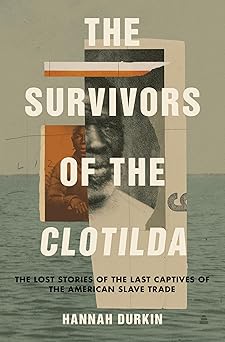
The Survivors of the Clotilda: The Lost Stories of the Last Captives of the American Slave Trade

The story of the Clotilda is one that is deeply ingrained in the history of America, yet it is also a tale that is often overlooked. Imagine being taken from your home, from your family, from your community, and being taken to a place where you are treated as property, not as a human being. This was the reality for the 110 people who were forcibly brought to America on the Clotilda, the last slave ship to land on US soil.

The Clotilda's arrival in Mobile Bay, Alabama, in July 1860, was a pivotal moment in American history. The ship had set sail from Nigeria, where the captives were taken from their homes, and had traveled across the Atlantic, enduring unimaginable hardships along the way. The 45-day journey across the Middle Passage was a nightmare, with people dying by the dozens, and the survivors facing unimaginable suffering. Once they arrived in America, the captives were sold into slavery, with only a few of them being sold to a single buyer, who went on to found an all-Black African Town in Northern Mobile. This town, which would later inspire writers of the Harlem Renaissance, including Zora Neale Hurston, became a beacon of hope and community for the survivors of the Clotilda. For many years, this community was known as Africatown, and it remains an important part of African American history and culture.

Over time, the survivors of the Clotilda went on to lead remarkable lives, contributing to the Civil Rights movement in Selma, and creating a thriving quilting community in Gee's Bend. Despite the trauma that they experienced, they turned their lives into works of art, creating a cultural legacy that continues to inspire and uplift us today. Dr. Hannah Durkin's work, The Survivors of the Clotilda, is a testament to the enduring power of the human spirit, and a powerful reminder of the importance of remembering and honoring our collective past.

I recently had the privilege of reading a book that left me in awe of the human spirit and a deeper understanding of American history. The story of a group of 110 people who were forcibly brought to America on a ship called the Clotilda is a harrowing tale of trauma, survival, and resilience. I couldn't help but think of my own grandmother who immigrated to America from a small village in Italy, and the struggles she faced when she first arrived. Her story is just one example of how the immigrant experience can shape a person's life and worldview.

The author's meticulous research and dedication to telling the story of the Clotilda's survivors are truly inspiring. The book is a tribute to the enduring power of the human spirit, and a powerful reminder of the importance of remembering and honoring our collective past. I was particularly struck by the story of the Clotilda's arrival in Mobile Bay, Alabama, and the impact it had on the community. The fact that the survivors were sold into slavery, but also went on to found an all-Black African Town in Northern Mobile, is a testament to the strength and determination of these individuals. It's a story that I will carry with me for a long time, and one that I hope will inspire others to learn more about this often-overlooked chapter in American history.

The legacy of the Clotilda's survivors lives on today, not just through their stories, but also through the art and culture they created. The quilting community in Gee's Bend, for example, is a testament to the power of community and creativity in the face of adversity. As I finished reading this book, I felt a sense of awe and gratitude for the human spirit's ability to overcome even the most daunting challenges. The Survivors of the Clotilda is a book that I highly recommend to anyone looking to learn more about American history, and the incredible people who have shaped it.

Rating: 4.0 / 5.0

I recently read a book that left me in awe of the human spirit and a deeper understanding of American history. The story of a group of 110 people who were forcibly brought to America on a ship called the Clotilda is a harrowing tale of trauma, survival, and resilience. The author's meticulous research and dedication to telling the story of the Clotilda's survivors are truly inspiring. I was particularly struck by the story of the ship's arrival in Mobile Bay, Alabama, and the impact it had on the community. The survivors were sold into slavery, but they also went on to create a thriving community that became a beacon of hope. The legacy of the Clotilda's survivors lives on today, not just through their stories, but also through the art and culture they created. I would give this book 4 out of 5 stars, as it is a powerful reminder of the importance of remembering and honoring our collective past.

Listen for the Lie: A Novel

If you've ever wondered what it's like to feel like you're walking on eggshells, knowing that people think you've done something terrible, but can't quite remember the details, this book may be for you. The story begins with Lucy, a woman who's been living in LA, trying to put the past behind her. She and her best friend Savvy were the perfect pair back in their small Texas town, but that was until the night Savvy died. Lucy was found wandering the streets, covered in Savvy's blood, and everyone thought she was the killer. The truth is, Lucy has no memory of that night, and even though she's tried to move on, the past comes back to haunt her when a popular true crime podcast starts investigating Savvy's murder.

As Lucy is forced to return to her hometown, she's faced with the reality that everyone there believes she's the one who killed Savvy. It's a lot to take in, especially when the podcast host, Ben Owens, starts to dig into the case. What ensues is a thrilling ride filled with twists and turns, as Lucy tries to stay one step ahead of the investigator. The author has done a great job of weaving in humor and dark comedy, making it easy to get invested in the story. January LaVoy's narration brings Lucy to life, capturing her sassiness and vulnerability perfectly. The way the author balances the dark elements with the lighter moments is truly impressive, making for a wild ride that's hard to put down.

One of the things that sets this book apart is its exploration of the complex relationship between Lucy and Savvy. As they grew up, the two were inseparable, but as they got older, their friendship took a dramatic turn. The author doesn't shy away from the messy details of their relationship, making it clear that nothing was ever as it seemed. This is a story that's as much about the mystery of Savvy's murder as it is about Lucy's own struggles with her past. With its intricate plot and memorable characters, it's no wonder this book won several awards, including a 2025 Audie Award for Best Mystery.

I recently had the pleasure of diving into a gripping and emotional story that had me on the edge of my seat. The author masterfully weaves a complex narrative that explores the darker corners of the human psyche. The story follows Lucy, a young woman trying to put the past behind her after a tragic event in her childhood. As she navigates her way through the complexities of her own memories, she's forced to confront the very real possibility that she may not be entirely innocent. The author's handling of this theme is both thought-provoking and unsettling, making it impossible to look away.

The author's writing style is effortless, with a narrative voice that's both relatable and engaging. The pacing is expertly handled, with each new revelation propelling the reader forward with a sense of urgency. I found myself becoming increasingly invested in Lucy's story, as she struggles to unravel the mysteries of her past and clear her name. The supporting cast is equally well-crafted, with a cast of complex and nuanced characters that add depth to the narrative.

I think what struck me most about this book was its exploration of the slippery nature of truth and memory. As Lucy delves deeper into the mystery of Savvy's murder, she's forced to confront the ways in which our memories can shape and distort our perceptions of reality. The author handles this theme with sensitivity and nuance, avoiding simplistic solutions or easy answers. Instead, the truth is revealed in all its messy, complicated glory. With its thought-provoking themes and breakneck pace, this book is sure to appeal to fans of psychological thrillers and mystery enthusiasts.

Rating: 2.8 / 5.0

This book is a gripping and emotional ride that will keep you on the edge of your seat. The author masterfully weaves a complex narrative that explores the darker corners of the human psyche. The story follows Lucy, a young woman trying to put the past behind her after a tragic event in her childhood. As she navigates the complexities of her own memories, she's forced to confront the possibility that she may not be entirely innocent. With its effortless writing style, expert pacing, and well-crafted characters, this book is sure to appeal to fans of psychological thrillers and mystery enthusiasts.

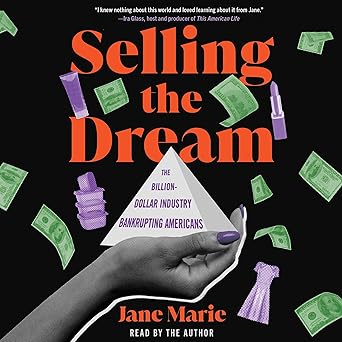
Selling the Dream: The Billion-Dollar Industry Bankrupting Americans

This book is a groundbreaking expose on the dark world of multilevel marketing schemes that preys on the desperate and vulnerable. The author, Jane Marie, takes a personal and compassionate approach to reveal the ways in which these companies make a profit off the hard work and life savings of ordinary people. With the help of her popular podcast, The Dream, she delves into the subject, exposing the truth behind the allure of easy income and the devastating consequences it has on individuals and communities.

Through her research and testimony, the author humanizes the victims of these schemes, sharing their stories and struggles to make ends meet. She sheds light on how factories closing, union-busting, and the decline of blue-collar jobs leave a trail of devastation in their wake. It is here that multilevel marketing companies opportunistically step in, promising easy money and financial freedom to those who join their ranks. However, a staggering 99.7% of those who join an MLM make no money or lose money, leaving them burdened with inventory they can't sell. The author's writing is a potent and thought-provoking critique of the American Dream gone awry, highlighting the motivations behind these companies' ventured and the individuals involved.

The book is a timely and urgent warning to anyone who has ever been promised the end of poverty or the escape from a low-paying job through multilevel marketing. The author mobilizes against the predatory practices of these companies, leveraging the power of storytelling to bring attention to the dire consequences of these schemes. This expose serves as a powerful call to action, urging readers to be aware of the risks and deception behind these companies and the devastating impact they have on individuals and communities.

I must say, I recently read a book that has left me feeling deeply unsettled and compelled to share its message with others. The author, Jane Marie, has written a deeply personal and eye-opening account of the dark world of multilevel marketing schemes that prey on the vulnerable. As someone who has always been passionate about sharing stories that bring about positive change, I was deeply moved by the author's commitment to shining a light on the destructive power of these companies.

The book is a powerful exploration of how these schemes can quickly spiral out of control, leaving individuals and communities devastated. The author interviews numerous people who have been affected by these companies, each with their own heart-wrenching story of struggle and hardship. What struck me most was the overwhelming sense of desperation that seems to drive these people to join these schemes in the first place - the promise of financial freedom, the need to provide for their families, the exhaustion of job options. These are stories that I believe we must all hear, in the hopes that we can learn from the mistakes of others and strive for a more just and equitable world. As someone who has witnessed firsthand the damage that these schemes can do, I am more convinced than ever of the importance of speaking out against them.

As I read through the book, I couldn't help but think about the broader social and economic context that has led to the rise of these multilevel marketing schemes in the first place. The author sheds light on how factories closing, union-busting, and the decline of blue-collar jobs have left many people feeling lost and stranded, with nowhere to turn. It is here that these companies step in, promising easy income and financial freedom to those who join their ranks. But the reality is far from rosy - the overwhelming majority of those who join these schemes make no money or lose money, leaving them burdened with inventory they can't sell. This book is a stark reminder that the pursuit of financial freedom is not a myth, but a harsh reality that can have devastating consequences for those who are least equipped to handle it.

Rating: 5.0 / 5.0

This book is a powerful expose that sheds light on the dark world of multilevel marketing schemes. The author humanizes the victims, sharing their stories of struggle and hardship. With the help of her podcast, she delves into the subject, revealing the truth behind the allure of easy income and the devastating consequences of these schemes. The author mobilizes against the predatory practices of these companies, leveraging storytelling to bring attention to the dire consequences. The book is a timely warning, urging readers to be aware of the risks and deception behind these companies and their devastating impact on individuals and communities. The author's writing is thought-provoking, highlighting the motivations behind these companies' ventures.

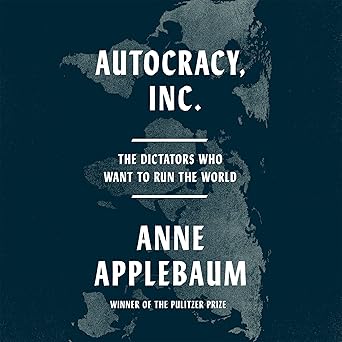
Autocracy, Inc.: The Dictators Who Want to Run the World

We are facing a global threat that is difficult to comprehend because it's not like anything we have seen before. Autocracies today are not single leaders in power, but complex networks of corrupt financial systems, advanced surveillance technologies, and sophisticated propaganda machines. These networks span multiple countries and operate in secret, influencing and manipulating each other to undermine democracy and promote their own interests.

The author describes how these networks work together to silence opposition and resist international pressure. They use financial systems to corrupt each other, share surveillance technology to monitor and suppress dissent, and spread propaganda to discredit democracy and distort reality. The author explains how these networks are not united by a single ideology, but rather by a common desire for power, wealth, and impunity. This is a very different kind of enemy than what we have faced in the past. The author calls for a new approach by democracies to confront this complex threat.

The author of this book argues that international condemnation and economic sanctions are not enough to stop autocracies. Even popular opposition movements in countries like Venezuela, Hong Kong, and Moscow are often unable to resist. The author calls for a fundamental reorientation of democratic policies to fight against this new kind of threat. This means being aware of the complexity of the problem and taking a multi-faceted approach. It requires not just governments and institutions to work together, but also citizens to be aware of the threat and take action to protect democracy. The book is a clear-sighted and fearless guide to understanding this threat and fighting back.

As I reflect on the devastating impact of authoritarian networks, I am reminded of the countless individuals I've met who have lost loved ones to regime crackdowns or witnessed the erosion of democratic values in their own communities. It's a harrowing reminder of the human cost of this global threat, one that transcends national borders and ideology.

The author of this book has shed light on a complex web of networks that span multiple countries, manipulating financial systems, surveillance technologies, and propaganda machines to undermine democracy and promote their own interests. These networks are often hidden from public view, making them difficult to detect and resist. What's striking about this enemy is its ability to assume many different forms – it can masquerade as a nationalist or populist movement, for instance, or use a veneer of social justice to mask its true intentions. This is a threat unlike any we've faced before, one that requires a fundamental reorientation of our democratic policies and a new approach to countering it.

The author's call for a multi-faceted approach, one that involves governments, institutions, and citizens working together to protect democracy, resonates deeply with me. I've seen how individual actions, no matter how small, can add up to make a difference. We've organized book clubs, rallies, and campaigns in our community, but the author's message provides a new layer of understanding and urgency to our efforts. For the first time, I see the global threat for what it is – a complex, interconnected web of power and corruption that demands our attention, our vigilance, and our activism. The book is a wake-up call, a reminder that the fate of our democracy is in our hands, and we must be willing to take action to protect it.

Rating: 4.5 / 5.0

This book is a warning about a complex network of autocracies that threaten democracy using advanced surveillance technologies, propaganda machines, and corrupt financial systems. The author describes how these networks silently manipulate and undermine each other to promote their own interests. This threat is difficult to comprehend and requires a new approach to counter. The book advocates for a multi-faceted approach that involves governments, institutions, and citizens working together to protect democracy. The author's message is urgent and highlighted the human cost of this global threat. The book is a call to action, urging readers to be aware of the threat and take action to protect democracy.

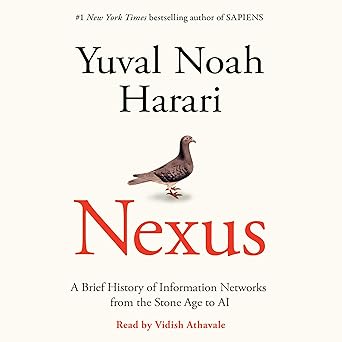
Nexus: A Brief History of Information Networks from the Stone Age to AI

The power of information has been a double-edged sword throughout human history. For 100,000 years, our species has accumulated immense knowledge and technological advancements, which have enabled us to shape our world in ways that were previously unimaginable. However, despite all our accomplishments, we now find ourselves facing an existential crisis. The world is on the verge of ecological collapse, and the sheer amount of misinformation flooding our systems is making it increasingly difficult to discern truth from falsehood.

As we look through the lens of human history, it becomes clear that the flow of information has played a pivotal role in shaping our world. From the Stone Age to the present day, different societies and political systems have wielded information to achieve their goals, often with devastating consequences. The Bible, for example, played a significant role in canonizing certain ideas and attitudes, while the spread of false information during Stalinism and Nazism led to some of the darkest periods in human history. Today, the rise of social media and the internet has created a perfect storm of misinformation, which can be just as destructive as it is convivial. By examining the complex relationship between information and truth, bureaucracy and mythology, and wisdom and power, we can begin to understand the choices we face in the face of non-human intelligence threatening our existence.

What is striking about the current state of the world is that we seem to be ignoring the lessons of our past. We are repeating the same mistakes over and over again, often with alarming consequences. But perhaps we are also at a crossroads. By exploring the hopeful middle ground between the extremes of truth and manipulation, we can rediscover our shared humanity and begin to work towards a more sustainable and equitable world. This is a difficult and complex task, but one that is fundamentally worth undertaking if we are to avoid the existential crisis that threatens us all.

I recently finished reading a book that challenged my perspective on the power of information and its impact on our world. The author masterfully explores how humans have used information throughout history to shape their societies and achieve their goals. From the Stone Age to the present day, information has played a significant role in canonizing certain ideas and attitudes, often with devastating consequences. The book examines the relationship between information and truth, bureaucracy and mythology, and wisdom and power, shedding light on how these forces can intersect and influence one another.

For instance, the author draws parallels between the Bible and the spread of misinformation during Stalinism and Nazism. It's a sobering reminder of how information can be used to manipulate and control populations. The book also highlights the impact of social media and the internet on our current situation, where it's easier than ever to spread false information and create a culture of misinformation. What struck me most about this book was how it made me reflect on my own role in consuming and sharing information. Have I ever critically evaluated the sources I encounter online? Do I share information without verifying its accuracy?

As I delved deeper into the book, I began to see the world through a different lens. The author's analysis of the complex relationships between information, truth, and power revealed a profound truth: that we are at a crossroads. We can continue down the path of repeating past mistakes, or we can strive for a middle ground that balances wisdom and nuance. The author's vision for a more sustainable and equitable world is both inspiring and painful to acknowledge. The stakes are high, but the possibility of redemption is just as compelling. I left the book with a sense of hope and a renewed commitment to seeking out the truth, no matter how challenging it may be.

Rating: 4.2 / 5.0

The book poses a thought-provoking exploration of the double-edged nature of information. It examines how humanity has harnessed information to shape its world, often with devastating consequences. The author masterfully reveals the intricate relationships between information, truth, and power. Reading this book forced me to confront the ways I engage with information online and to reevaluate my own role in sharing and consuming knowledge. This book presents a compelling vision for a more sustainable future, one that balances wisdom and nuance. However, it also acknowledges the high stakes involved. Ultimately, the book's message is one of hope and responsibility, encouraging readers to critically evaluate the information they encounter and work towards a more equitable world.